
A sudden movement, a few splashes, and suddenly your favorite shirt is stained forever… or so it seems. Bleach stains are one of those little daily dramas that make you want to give up. However, before you give up on your garment, know that there are solutions to minimize the stain or even turn the accident into a creative opportunity. Why bleach leaves permanent marks Bleach is not a common stain: it whitens the fabric by removing the pigment. In other words, the color disappears. This is why repeated washings don’t change anything. The goal is not to “remove” the stain, but to reduce its visibility or visually even out the surrounding color. The trick to minimize the stain (with caution) A commonly cited method is to use clear alcohol (like vodka or gin) to even out the discolored area. How to safely proceed (with precise amount) Pre-rinse (required) Rinse the stained area under cold or lukewarm running water for at least 2 minutes, gently massaging the fabric between your fingers to remove all traces of bleach. See more on the next page Learn more Fabric dyeing Garment care products Home cleaning tips: Gently squeeze out excess water without wringing. Working conditions: Prepare in a well-ventilated area (open a window). Lay the garment on a clean towel. Amount of alcohol: Pour 5 ml of pure alcohol (about 1 teaspoon) into a small container. Use a cotton ball or Q-tip. Precise application: Soak a cotton ball with 2-3 ml of alcohol (the ball should be damp, not dripping). Gently dab the stained area for 30-60 seconds, without rubbing.
Treatment time
Leave on for 2 minutes, then immediately rinse the area with clean water for 1 minute.
Repeat if necessary.
If the stain is visibly lighter but still not faded enough, you can repeat the process a second time, using another 2-3 ml of alcohol.
Remember the ending
Wash the garment immediately in the washing machine, at the temperature indicated on the care label, with your usual detergent.
Important to remember:
The total amount of alcohol should not exceed 10 ml per item.
Never apply to wool, silk, viscose, or delicate fabrics.
Always rinse thoroughly before using alcohol (bleach + alcohol = danger).
This method will not remove the stain; it may only lighten it, especially on dark fabrics.
Never mix bleach and alcohol. Make sure the fabric has been thoroughly rinsed before attempting this method, and never test it on delicate fabrics.
Application time:
leave on for 2 minutes, then immediately rinse the area with clean water for 1 minute.
Repeat (if necessary)
If the stain is visibly lighter but still not faded enough, you can repeat the process a second time, using another 2-3 ml of alcohol.
see the continuation on the next page
Find out more
Dyeing of materials
Garment care products
Tips for cleaning your home
Gently squeeze out excess water without wringing.
Working conditions
: Prepare in a well-ventilated area (open a window). Lay the garment on a clean towel.
Amount of alcohol
Pour 5 ml of pure alcohol (about 1 teaspoon) into a small container.
Use a cotton ball or cotton swab.
Precise application:
Soak a cotton ball with 2-3 ml of rubbing alcohol (the ball should be damp, not dripping).
Gently dab the stained area for 30-60 seconds, without rubbing.
Treatment time
Leave on for 2 minutes, then immediately rinse the area with clean water for 1 minute.
Repeat if necessary.
If the stain is visibly lighter but still not faded enough, you can repeat the process a second time, using another 2-3 ml of alcohol.
Remember the ending
Wash the garment immediately in the washing machine, at the temperature indicated on the care label, with your usual detergent.
Important to remember:
The total amount of alcohol should not exceed 10 ml per item.
Never apply to wool, silk, viscose, or delicate fabrics.
Always rinse thoroughly before using alcohol (bleach + alcohol = danger).
This method will not remove the stain; it may only lighten it, especially on dark fabrics.
Never mix bleach and alcohol. Make sure the fabric has been thoroughly rinsed before attempting this method, and never test it on delicate fabrics.
Application time:
leave on for 2 minutes, then immediately rinse the area with clean water for 1 minute.
Repeat (if necessary)
If the stain is visibly lighter but still not faded enough, you can repeat the process a second time, using another 2-3 ml of alcohol.
see the continuation on the next page
Remember the ending
Wash the garment immediately in the washing machine, at the temperature indicated on the care label, with your usual detergent.
Important to remember:
The total amount of alcohol should not exceed 10 ml per item.
Never apply to wool, silk, viscose, or delicate fabrics.
Always rinse thoroughly before using alcohol (bleach + alcohol = danger).
This method will not remove the stain; it may only lighten it, especially on dark fabrics.
Never mix bleach and alcohol. Make sure the fabric has been thoroughly rinsed before attempting this method, and never test it on delicate fabrics.
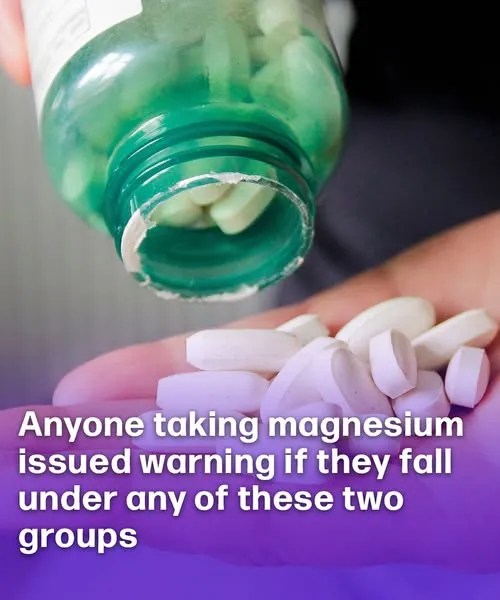
Health Experts Issue New Warning About Magnesium Supplements — Especially for These Two High-Risk Groups
The Hidden Risks of a Popular Supplement
In recent years, magnesium supplements have become one of the most talked-about health trends. Social media is flooded with posts claiming that magnesium can improve mood, boost energy, and even help with sleep. For many older adults looking for natural ways to stay healthy, that kind of promise sounds hard to resist.
But doctors are now issuing a serious warning — magnesium isn’t safe for everyone. While it’s true that magnesium is an essential mineral that plays a vital role in heart health, nerve function, and bone strength, experts say that too much of it, or taking it under the wrong conditions, can do more harm than good.
In fact, if you fall into either of these two groups, you should think twice before taking magnesium — or any supplement — without talking to your doctor first.
1. People With Kidney Problems Should Avoid Magnesium
Continue reading…
Read more on the next page >>
For those with kidney issues, magnesium supplements can pose significant danger. The kidneys are responsible for filtering excess minerals from the body — and when they aren’t functioning properly, magnesium can build up to toxic levels in the bloodstream.
According to medical professionals, this buildup can trigger a range of alarming symptoms:
- Irregular heartbeat
- Confusion or disorientation
- Extremely low blood pressure
- Weak or slowed breathing
- In severe cases, even coma or death
As WebMD explains, people with impaired kidney function simply can’t clear magnesium efficiently. That means even small doses that are safe for most people can become dangerous.
Doctors urge anyone with chronic kidney disease, reduced kidney function, or past kidney injury to avoid magnesium unless it’s specifically prescribed and closely monitored by a healthcare provider.
2. People Without a Magnesium Deficiency Don’t Need It
Continue reading
Read more on the next page >>
: if you’re not deficient in magnesium, taking extra won’t give you extra health benefits.
While magnesium deficiency is fairly common — estimates suggest that between 9% and 17% of adults, and up to 20% of teenagers, may have low magnesium levels — many people already get enough through diet. Foods like leafy greens, nuts, seeds, beans, and whole grains are rich sources of the mineral.
But despite the growing popularity of supplements, experts say that taking magnesium when you don’t need it is not only unnecessary — it can also cause uncomfortable side effects such as:
- Diarrhea
- Nausea
- Stomach cramping
- Vomiting
Continue reading…
Read more on the next page >>
gender, but according to the NHS and U.S. dietary guidelines:
- Adult men should get around 300 mg per day
- Adult women should aim for about 270 mg per day
That’s not difficult to achieve through a balanced diet. Magnesium is naturally found in:
- Almonds, cashews, and peanuts
- Spinach and kale
- Whole grains like brown rice and oats
- Black beans and lentils
- Avocados and bananas
Health authorities caution against taking more than 400 mg a day from supplements, as higher doses can cause health complications, especially over time.
If you’re concerned about magnesium levels, it’s always better to get tested before starting any supplement. A simple blood test can determine whether you truly need extra magnesium or if your diet is already meeting your body’s needs.
The Social Media Supplement Trap
CContinue reading…
Read more on the next page >>
One of the biggest reasons for the rise in supplement-related health issues comes from viral trends on social media.
Each week seems to bring a new “miracle supplement” — one month it’s potassium, the next it’s zinc, then magnesium or collagen. These trends often spread faster than scientific research can catch up.
The problem, according to physicians, is that online health influencers rarely consider individual health conditions. What’s good for one person can be dangerous for another.
Dr. Nassar warns that supplements should never replace professional guidance:
“Magnesium has benefits, yes — but context matters. Your age, medications, and underlying health conditions all determine whether it’s helpful or harmful.”
That’s especially important for older adults, who often take medications that can interact with supplements in unpredictable ways.
When to Talk to Your Doctor
Continue reading…
Before taking magnesium — or any supplement — doctors recommend asking these simple but crucial questions:
- Do I really need this supplement?
Get tested for deficiencies before assuming you’re low on magnesium. - Could it interact with my medications?
Magnesium can interfere with antibiotics, heart medications, and certain diuretics. - What’s the right dosage for me?
Your doctor can recommend a safe amount based on your health, diet, and age. - Would food sources be safer?
For most people, adding more magnesium-rich foods to their diet is safer and more effective than supplements.
A Simple Rule for Safe Supplement Use
Continue reading…
Read more on the next page >>
Magnesium is an essential mineral, but like any nutrient, too much of a good thing can become harmful.
If you have kidney problems, or if your magnesium levels are already normal, supplements could cause more risk than reward.
So before you reach for another bottle that promises better sleep, stronger bones, or more energy, take a step back. The best health decisions come not from online trends — but from medical guidance tailored to you.
Your body already knows what it needs. Sometimes, all it asks for is balance.
