
PART 1
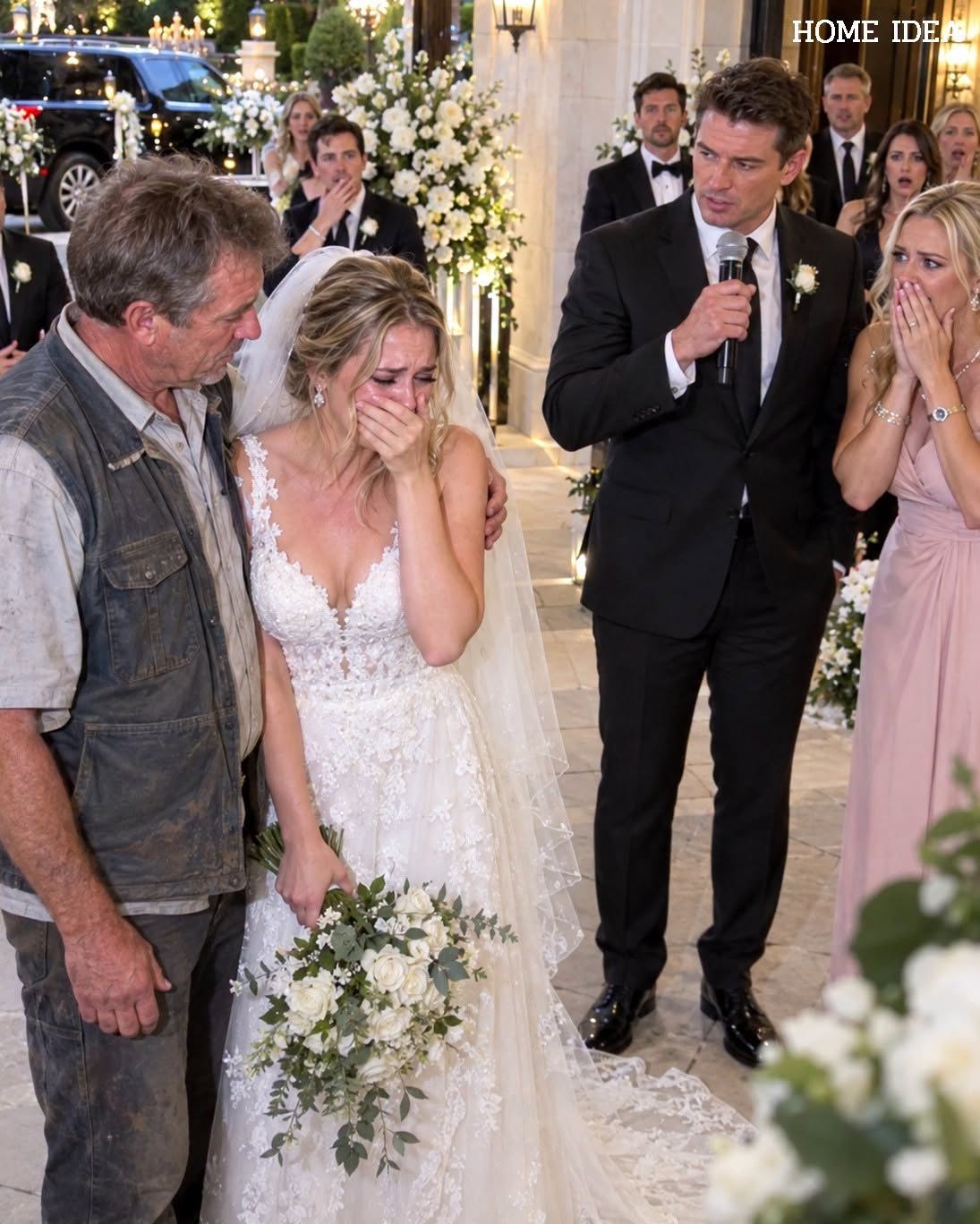
“There will be no wedding today. I only came so everyone could see that I would never marry a gardener’s daughter.”
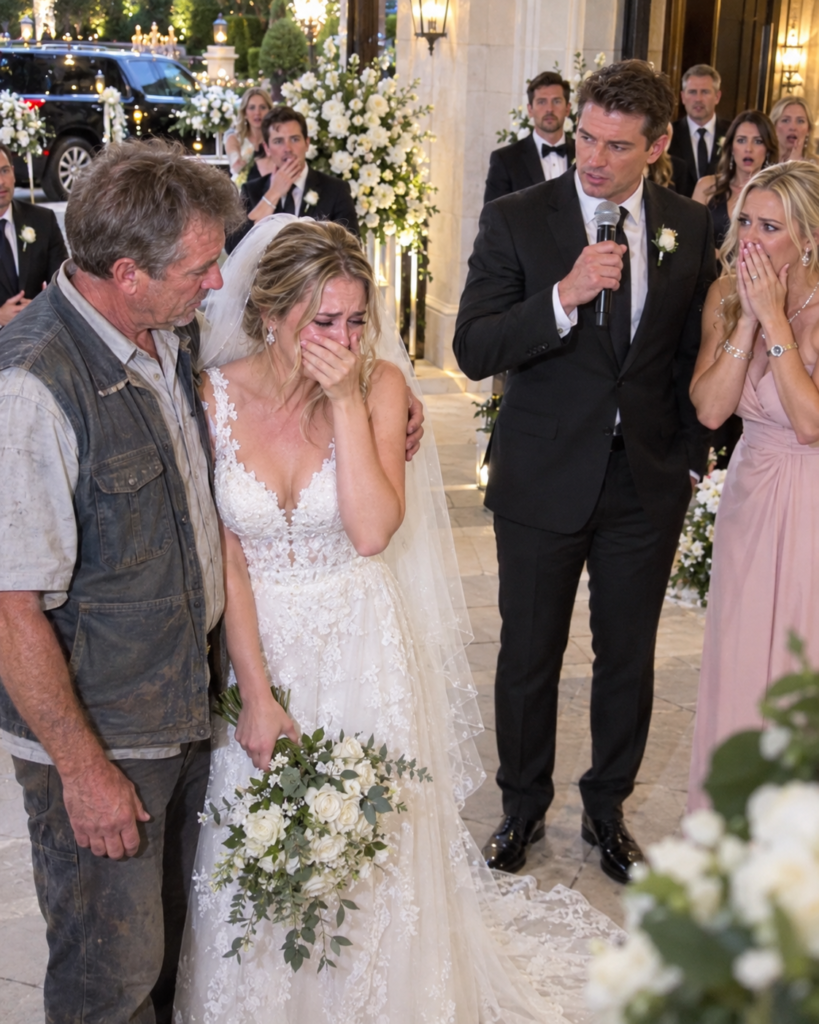
Tristan’s voice rang out clearly through the microphone, his lips curved in a smile that still makes my stomach twist with humiliation. One hundred and twenty guests sat frozen in their seats.
I stood there in my white wedding dress beside the makeshift altar at the Oakridge community center, my heart hammering so violently I thought it might shatter. My father, James, seemed to shrink inside the clean button-up shirt he had bought on installments just for this day. His shoulders slumped as the weight of the moment crushed him.
My mother had passed away when I was nine. From that day on, my father became my entire world. He mowed lawns across the residential developments of Silver City, hauled heavy sacks of dirt under the blazingsun, and drove an old pickup truck that rattled and shook every time the engine turned over. He came home each evening with raw, calloused hands and a back that grew more hunched with every passing year, yet he never uttered a single word of complaint.
When I turned twenty-four, one quiet night he pulled a rusty tin coffee can from beneath his old bed. Inside were neatly folded twenty-, fifty-, and one-hundred-dollar bills, carefully saved over more than twelve long years.
“It’s for your wedding, Maisie,” he told me, his eyes shining with quiet pride. “I may not have a big house or valuable land, but I never want you to feel ashamed of your father.”
Tears streamed down my face as I learned he had sacrificed tips, spare coins, and portions of his daily wages for over a decade just to give me this one special day.
WhenTristan proposed, my father poured every last cent of those savings into renting the community center, buying food, and filling the hall with beautiful flowers. Neighbors lovingly sewed the tablecloths, the local boys strung up bright lights, and my aunt prepared a generous feast for everyone.
Tristan had pretended to accept the simple arrangements at first. But three days before the ceremony, he showed up with his parents. His mother, Mara, scanned our modest living room with visible disgust, as though she feared she might catch something just by standing there.
“My son cannot get married in a cheap public hall,” she declared coldly. “Businessmen, officials, and important clients will be attending.”
Humiliated, my father immediately offered to sell his truck and lawnmowers to pay for a luxury hotel venue. I refused outright. “No, Dad. I’d rather cancel everything than let you lose your livelihood.”
Tristan apologized profusely afterward andswore he would show up. I wanted so desperately to believe him.
On the day of the wedding, he arrived forty minutes late, flanked by his parents and several wealthy relatives. He wasn’t nervous at all — he had come fully prepared to destroy us.
After announcing the cancellation to the stunned crowd, he pointed his finger straight at my father.
“I have no intention of spending my life with a father-in-law who cuts grass for pocket change,” Tristan sneered into the microphone.
Some guests looked away in discomfort, while others whispered that Tristan was simply protecting his social standing. Mara smiled arrogantly and added that families should always know their proper place in society.
My father staggered backward. I rushed forward and wrapped my arms around him tightly before he could collapse. He began to cry softly against my shoulder, his tears soaking through the delicate fabric of my weddingdress.
“Forgive me, daughter,” he whispered in a broken voice. “If I had made enough money, no one would have treated you this way.”
Then, with heartbreaking courage, he walked to the center of the room, bowed his head, and apologized to every guest for making them attend a wedding that would never happen.
Watching this man — who had worked honestly his entire life — feel ashamed of who he was broke my heart far more than losing the man I thought I loved.
At that very moment, loud sirens suddenly wailed outside the building.
A long procession of official black SUVs and military vehicles rolled into the crowded parking lot. A man in full dress uniform, his chest gleaming with medals, stepped out of the lead vehicle. He strode purposefully into the hall without sparing a glance at Tristan or his wealthy family.
He stopped directly in front of myfather, stood ramrod straight, and delivered a crisp, formal military salute.
“Mr. James Evans,” he said, his deep voice cracking slightly with emotion. “I finally found you after all these years.”
No one in the room could possibly imagine what was about to unfold.
PART 2
My father stared at the officer in confusion, searching his memory for a face he couldn’t quite place.
“Excuse me, Commander, I think you’ve mistaken me for someone else,” he said softly.
The man shook his head slowly, a warm smile breaking across his stern features. He introduced himself as Shawn Fitzgerald, a commander in the United States Army.
Twelve years earlier, as a young cadet, the vehicle he was traveling in had overturned on a highway near Greenwood. While many people simply stood by and watched the flames grow, a humble gardener had stopped his old truck, pulled Shawn from the burning wreckage,and rushed him to the hospital.
“That man handed over every single dollar he had earned that week so I could receive immediate treatment,” Shawn told the silent crowd. “Then he disappeared without ever giving his name.”
My father closed his eyes tightly as the memory finally surfaced — the bloodied young man he had carefully loaded into his rattling pickup.
“Anyone would have done the same in that situation,” my father replied with genuine modesty.
“No, sir,” Shawn said firmly. “Many people watched, but only you took action.”
Shawn explained that he had spent years searching for his savior without success. Recently, one of his soldiers had spotted my wedding invitation at a local stationery store and recognized the distinctive last name from an old hospital report. That was why he had come with several comrades — to thank my father in person on what was supposed to be his special
