
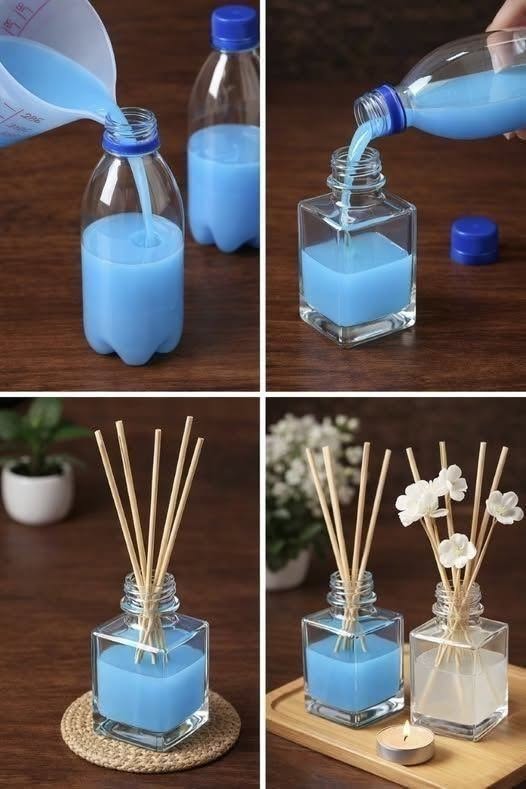
More importantly, this mixture is discouraged by cleaning and fragrance specialists and may even pose health and safety risks. Let’s see what’s safe, natural, and truly effective.
 Why this ‘2-ingredient’ trick is misleading (and potentially dangerous):
The suggested mixture includes:
fabric softener (contains synthetic fragrances, phthalates, and quaternary ammonium compounds that can irritate the respiratory tract)
, alcohol (can react unpredictably with other chemicals, especially when evaporating indoors),
coarse salt, and cloves (natural, but ineffective as air fresheners on their own).
 Important: Fabric softener is not designed to be diffused in open air. Left in an open container, its volatile organic compounds (VOCs) can degrade indoor air quality and trigger allergies or asthma.
This method is neither natural nor recommended by experts, despite claims found online.
 True tips for creating natural 2-ingredient home fragrances (safe and effective)
ADVERTISEMENT
Here are real, expert-approved methods for scenting your home with just two simple, non-toxic ingredients:
1. Ingredients for a citrus and clove infusion
: orange/lemon peels and whole cloves.
Preparation: simmer in a pot of water for 1 to 2 hours.
Result: a warm, spicy, and citrusy aroma that naturally freshens the air. 2. Air freshener made with baking soda and essential oils
Ingredients: Baking soda + 10 to 15 drops of essential oil (e.g., lavender, lemon, eucalyptus).
Preparation: Mix in a small jar; cover with a breathable fabric or pierce holes in the lid.
Result: Neutralizes odors and diffuses a delicate fragrance for several weeks.
 Please click the “Continue reading” button below to continue.
Read more on next pageADVERTISEMENT
3. Coffee Beans + Cinnamon Sticks
Ingredients: Whole coffee beans + cinnamon sticks
Preparation: Place in a shallow bowl or muslin bag.
Result: A warm, earthy fragrance that naturally absorbs odors.
ADVERTISEMENT
4. Vanilla and Water Linen Spray
: Ingredients: 1 tablespoon pure vanilla extract + 250 ml water.
Preparation: Pour into a spray bottle and lightly spray on curtains or linens.
Result: A sweet and comforting fragrance, reminiscent of a pastry.
ADVERTISEMENT
 Why choose natural?
Synthetic air fresheners often contain
phthalates (endocrine disruptors),
formaldehyde (a known carcinogen)
, and VOCs that contribute to “sick building syndrome.”
Natural alternatives improve air quality while adding subtle, pleasant fragrances, without hidden toxins.
 Final tip: Simplicity is key.
Even with natural fragrances, avoid overpowering scents. A light, fresh aroma should enhance your space without overwhelming it. Open windows regularly, keep surfaces clean, and let natural materials (wood, cotton, plants) contribute to a calm and soothing atmosphere.
The aura of your home isn’t created by strong smells; it thrives on freshness, simplicity, and care.
So, forget fabric softener and instead infuse orange peels. Your lungs (and your peace of mind) will thank you.
