
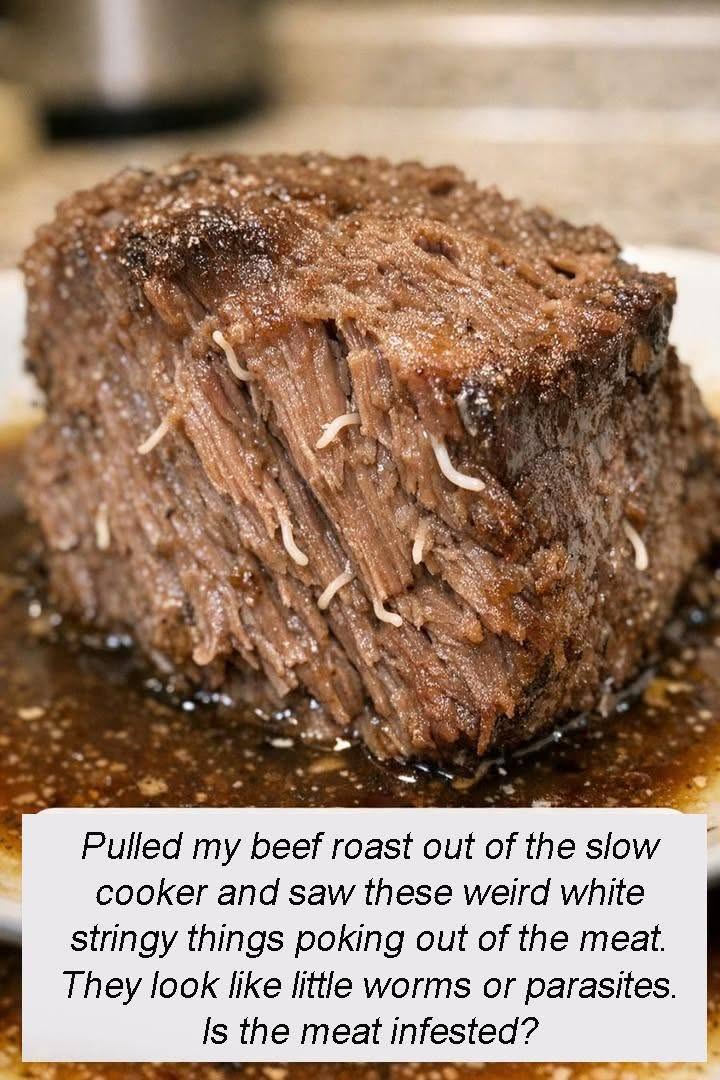
of the meat’s structure or a result of the cooking process. This article will explain what these white strings likely are, why they appear, and when you should be concerned.
1. Why Those White Stringy Bits Probably Aren’t Worms
It’s natural to be concerned if you see something unexpected in your food, especially if it resembles worms or parasites. However, in most cases, these white stringy bits are not worms but rather parts of the meat’s structure known as connective tissue. Connective tissue is made up of proteins like collagen, which is common in beef roasts and can appear stringy after slow cooking.
Parasites in beef are incredibly rare, especially in countries with strict food safety regulations. Moreover, parasites typically do not survive the cooking process, particularly at the temperatures used in slow cooking. If you’ve cooked your meat to the appropriate temperature, it’s very unlikely that any parasites couldof the meat’s structure or a result of the cooking process. This article will explain what these white strings likely are, why they appear, and when you should be concerned.
1. Why Those White Stringy Bits Probably Aren’t Worms
It’s natural to be concerned if you see something unexpected in your food, especially if it resembles worms or parasites. However, in most cases, these white stringy bits are not worms but rather parts of the meat’s structure known as connective tissue. Connective tissue is made up of proteins like collagen, which is common in beef roasts and can appear stringy after slow cooking.
Parasites in beef are incredibly rare, especially in countries with strict food safety regulations. Moreover, parasites typically do not survive the cooking process, particularly at the temperatures used in slow cooking. If you’ve cooked your meat to the appropriate temperature, it’s very unlikely that any parasites couldhave survived.
2. Understanding Muscle Fibers And Connective Tissue In Beef
Muscle fibers and connective tissues are integral parts of any cut of meat. Muscle fibers are the actual ‘meat’ part of the muscle, while connective tissues hold these fibers together and attach muscles to bones. Beef contains a significant amount of connective tissue, which is largely composed of collagen.
When these tissues are cooked, especially in a slow cooker, the collagen can become gelatinous and appear as white, stringy bits. This is particularly noticeable in cuts like chuck roast or brisket, which are known for their high connective tissue content. These stringy appearances are a natural result of the cooking process and are not indicative of spoilage or infestation.
3. What Slow Cooking Does To Meat Structure
Slow cooking is a method that uses low temperatures over a prolonged period to break down tough fibers and connective tissues inhave survived.
2. Understanding Muscle Fibers And Connective Tissue In Beef
Muscle fibers and connective tissues are integral parts of any cut of meat. Muscle fibers are the actual ‘meat’ part of the muscle, while connective tissues hold these fibers together and attach muscles to bones. Beef contains a significant amount of connective tissue, which is largely composed of collagen.
When these tissues are cooked, especially in a slow cooker, the collagen can become gelatinous and appear as white, stringy bits. This is particularly noticeable in cuts like chuck roast or brisket, which are known for their high connective tissue content. These stringy appearances are a natural result of the cooking process and are not indicative of spoilage or infestation.
3. What Slow Cooking Does To Meat Structure
Slow cooking is a method that uses low temperatures over a prolonged period to break down tough fibers and connective tissues inbacteria, ensuring that your meal is safe to consume. Using a meat thermometer can help you verify the internal temperature and provide peace of mind.
8. Common Cuts Of Beef Most Likely To Show These White Strings
Certain cuts of beef are more prone to displaying these white strings due to their higher content of connective tissue. Cuts such as chuck roast, brisket, and round roast are common examples. These cuts benefit from slow cooking methods because the extended cooking time allows the connective tissue to break down and soften.
These cuts are often more affordable and flavorful, making them popular choices for slow cooking recipes. However, the presence of these white strings is a typical characteristic of these cuts and should not be a cause for concern.
9. What Butchers And Food Scientists Say About The Phenomenon
Butchers and food scientists agree that the appearance of white strings inslow-cooked beef is typically due to the breakdown of connective tissues. These professionals emphasize that this is a normal and expected part of cooking certain cuts of beef, especially those with high collagen content.
They also note that these phenomena are often misunderstood and wrongly attributed to spoilage or contamination. Education on meat structure and cooking processes can alleviate consumer concerns and enhance the eating experience.
10. How To Trim, Prep, And Cook Roasts To Minimize The Ick Factor
To minimize the appearance of white strings, you can trim excess visible fat and connective tissue before cooking. This won’t eliminate the strings entirely but can reduce their prevalence. Additionally, searing the meat before slow cooking can help improve the overall texture and appearance.
Marinating the meat can also help break down connective tissues prior to cooking, resulting in a smoother texture. Using a slow cooker with a lid that fits
well will retain moisture and help the collagen transform into gelatin more evenly.
11. When To Toss The Roast And When It’s Safe To Eat
If your roast has been cooked to the proper internal temperature and does not exhibit any signs of spoilage like a bad odor, unusual color, or slimy texture, it should be safe to eat. The white strings themselves are not harmful and are a normal part of the cooking process.
However, if you have any doubts about the safety of your meat due to its smell, color, or texture, it’s better to err on the side of caution and discard it. Food safety should always be a priority to prevent foodborne illness.
