
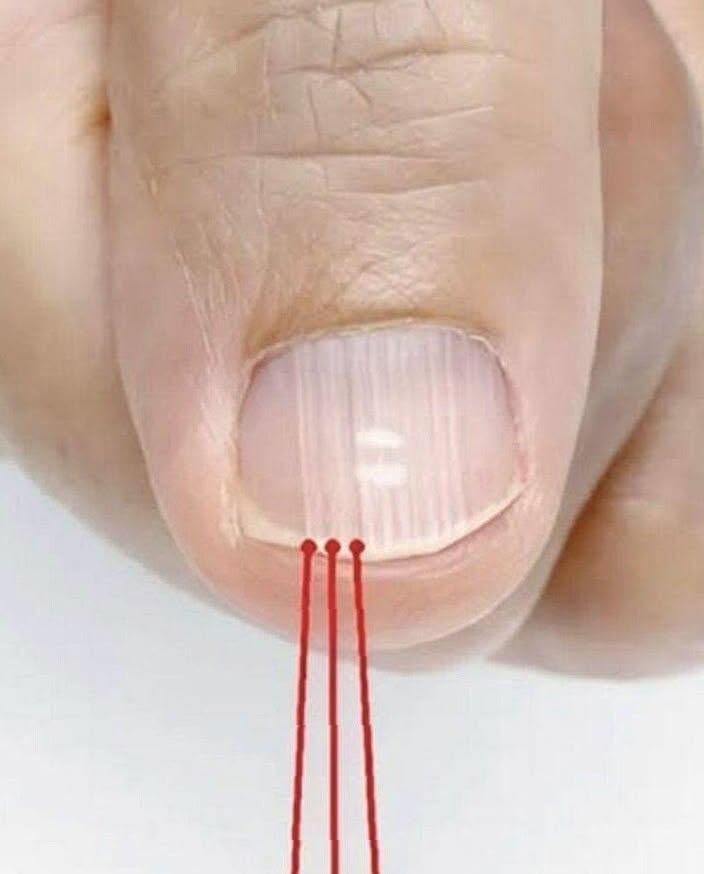
Run a finger across your nail and you may notice them: fine lines running from the base up toward the tip. These are vertical ridges, also called longitudinal striations, and they are one of the most common changes people spot in their nails as the years go by. Some are so subtle you can barely see them, while others can be clearly felt. For the vast majority of people, especially after 40, they are simply part of the body’s natural aging process, no more alarming than a few gray hairs or the first soft lines on your skin.What Vertical Ridges Actually Are
Your nails are made by tiny keratin-producing cells in an area called the nail matrix, the growth zone hidden at the base of each nail. When those cells are working smoothly and evenly, the nail grows out flat and polished. Over time, though, their output can become slightly less uniform.
As growth becomes a little uneven, the surface of the nail records that unevenness as raised lines running lengthwise. In other words, vertical ridges are essentially a visible history of how steadily your nails have been growing. Just as skin loses some of its bounce and hair changes texture, the structure of your nails naturally shifts too.
Why They Appear After 40
Several everyday factors tend to make ridges more noticeable in midlife, most of them completely harmless.
Nutrient gaps: shortfalls in biotin (vitamin B7), iron, zinc, or magnesium can show up in the nails. As we age we absorb some nutrients less efficiently, so even a decent diet can leave gaps.When Ridges Deserve a Closer Look
In most cases ridges are nothing to worry about. Occasionally, though, pronounced changes can hint at something that deserves attention, particularly when they arrive alongside other symptoms.
- Poor circulation.
- Thyroid imbalances, whether underactive or overactive.
- Rheumatoid arthritis.
- Skin conditions such as eczema or psoriasis.
A useful distinction is between vertical ridges, which are usually benign, and deep horizontal grooves or dark discoloration, which are more worth investigating. If your ridges appear suddenly and are joined by fatigue, thinning hair, slow healing, joint pain, or changes in skin texture, it is a good idea to check in with a healthcare professional.How to Keep Your Nails Healthy
Whether or not your ridges ever fade, a few simple habits will keep your nails stronger and more comfortable.
- Moisturize regularly: massage a hand cream or nail oil into your nails and cuticles, especially after washing your hands.
- Protect them: wear gloves when washing dishes or handling cleaning products to limit drying and cracking.
- Eat for your nails: include sources of biotin, iron, zinc, and magnesium, such as eggs, nuts, seeds, leafy greens, and whole grains.
- Buff, do not scrape: gentle buffing can smooth the surface, but aggressive filing thins the nail and can do more harm than good.
- Stay hydrated: drinking enough water supports the moisture balance of your whole body, nails included.
Vertical ridges are, more often than not, simply a sign of a life well lived. Care for your nails kindly, keep an eye out for anything that changes suddenly, and let the rest be the ordinary, unremarkable work of time.
Natural aging: the body regenerates cells more slowly with age, including those in the nail matrix, so the nail surface becomes a little less smooth.
Dryness and dehydration: nails, like skin, lose moisture over time. Drier nails are more brittle and less flexible, which makes existing ridges look more pronounced. Frequent handwashing and contact with soaps or cleaning products without gloves can make this worse.
